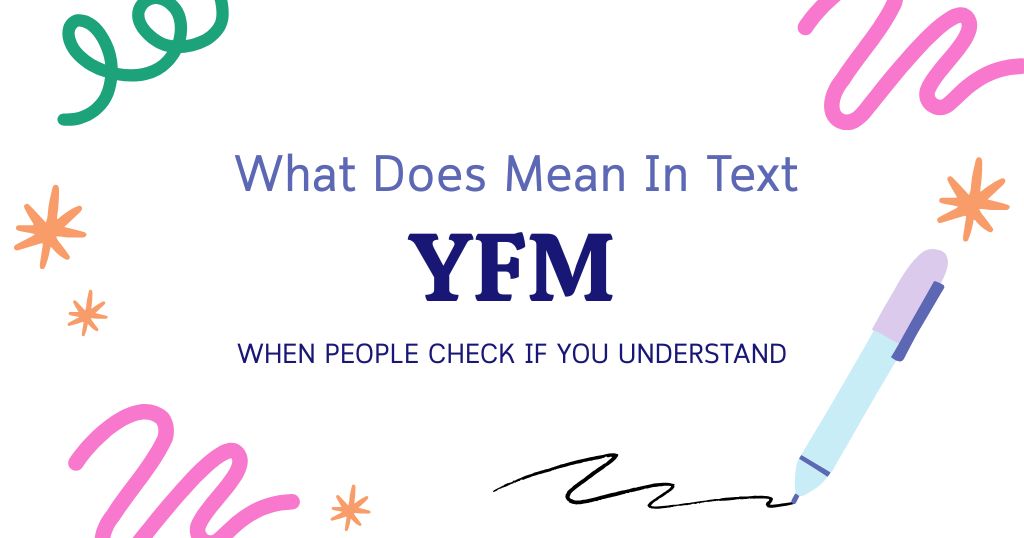
YFM stands for “You Feel Me?” It’s a casual way to ask if someone understands what you’re saying or agrees with your point.
When This Term Might Confuse You
Someone drops “yfm” at the end of a long rant about their terrible Monday. Or you see it under a TikTok comment and can’t tell if it’s a question or just… vibes. Maybe a friend keeps using it in texts and you’ve been nodding along, secretly unsure what response they’re waiting for.
This term isn’t confusing because it’s complicated. It’s confusing because it doesn’t always work like a regular question. Sometimes people aren’t asking anything at all.
What It Actually Means in Real Life
“You feel me?” isn’t really asking if you feel them physically. It’s asking if you’re on the same wavelength.
When someone types “yfm,” they’re checking if you get the emotion behind what they just said. Not just the words—the whole feeling. It’s like they’re saying, “Do you understand where I’m coming from right now?”
People use this instead of longer phrases because it keeps the conversation flowing. Typing out “Do you know what I mean?” or “Can you relate?” feels heavy. YFM keeps things light while still looking for that little nod of agreement.
It’s basically a soft check-in. They want to know you’re still with them.
How People Use It in Everyday Situations
You’ll see YFM pop up when someone’s venting, sharing an opinion, or telling a story they need you to validate.
In texts, it usually lands at the end of a statement:
- “I can’t believe they scheduled the meeting for 7am, yfm“
- “Sometimes you just need to skip the party and recharge, yfm”
On social media, it shows up in captions or comments where people are building connection:
- Under a post about Monday struggles: “Why does the weekend go by in 2 seconds but Monday lasts 9 hours yfm”
- Replying to someone’s story: “That outfit goes hard yfm”
In group chats, it keeps the energy moving. Instead of waiting for everyone to respond individually, “yfm” invites a quick reaction or emoji.
Here’s how it might look in a real conversation:
Alex: bro I studied the wrong chapters for the quiz
Jordan: nah that’s brutal
Alex: like I spent 3 hours on unit 4 and it was all unit 5, yfm
Jordan: I feel you, that’s the worst
The term invites Jordan to acknowledge Alex’s frustration without needing a long reply.
Read More: What Does DBL Mean in Text? Real Meaning, Examples & When Not to Use It
Tone & Context Matter More Than You Think
YFM changes depending on who’s saying it and why.
Between close friends, it’s a trust thing. You’re asking them to back you up emotionally. When a friend says “I need a whole day to do nothing this weekend, yfm,” they’re looking for you to say “same” or “facts.”
With someone you don’t know well, it can feel pushy. If a coworker you barely talk to ends every sentence with “yfm,” it might come across like they’re assuming you agree with everything they say.
The tone also shifts based on what comes before it:
Playful: “I put hot sauce on everything, yfm” — just sharing a quirk
Serious: “I can’t keep covering for people who don’t show up, yfm” — needs real validation
Sarcastic: “Oh yeah, waking up at 5am is my favorite thing ever, yfm” — obviously joking
One warning: if you use it after every single statement, people might think you’re fishing for constant agreement. It loses its punch when it’s overused.
When You Should NOT Use This Term
Skip YFM in professional emails or formal messages. Your boss doesn’t need “I’ll have the report done by Friday, yfm” in their inbox.
Don’t use it when you’re delivering serious news. “I can’t make it to your event, yfm” sounds dismissive, like you’re not taking the situation seriously.
Avoid it with people who might not know the slang. Texting your grandma “Traffic was insane, yfm” will just confuse her. Same goes for anyone who’s not fluent in casual internet language.
It also doesn’t work well in public comments where you’re addressing strangers. Asking random people “yfm?” can feel like you’re demanding agreement from people who don’t know you.
Read More: PDA Meaning in Text: What It Means in Online Conversations
Other Ways to Say the Same Thing
Depending on the vibe you want, here are terms that work similarly:
| Term | Tone | When to Use It |
| You know? | Casual, everyday | When you want something even more conversational |
| Right? | Direct, seeking agreement | When you’re making a clear point |
| Feel me? | Slightly more intense | When the emotional piece matters more |
| Make sense? | Neutral, clarifying | When you’re checking actual understanding |
| FR (For Real) | Emphasis on truth | When you’re stressing that something’s genuine |
| IKR (I Know, Right) | Agreement assumed | When you’re responding to someone else |
The difference between “yfm” and “you know?” is subtle. “You know?” works in almost any conversation. YFM feels more tied to internet culture and younger crowds.
More Post: SIMP Meaning in Slang: What Does SIMP Stand For?
Real-Life Examples
Venting to a friend:
“My phone died right before my alarm was supposed to go off and I missed my first class, yfm”
Sharing an opinion online:
“Pineapple on pizza isn’t even that weird, yfm”
In a group chat:
“Can we please pick a restaurant that’s not 40 minutes away this time, yfm”
Casual check-in:
Friend 1: “I’m so over this weather”
Friend 2: “It’s been raining for like 8 days straight, yfm”
Snapchat story reply:
“That concert looked sick, yfm”
Instagram comment:
“Sometimes you just gotta unfollow people for your own peace, yfm”
Where You’ll See It Most
YFM is everywhere, but it thrives on platforms where quick, informal conversation happens.
Snapchat and Instagram are huge for it. People use it in DMs when they’re going back and forth quickly, or in comments when they’re building on someone else’s post.
TikTok comments are full of it. Someone will post about a relatable struggle and the comments will be packed with “yfm” as a way to say “I’m with you on this.”
It’s less common on LinkedIn or formal platforms. You won’t see it in professional tweets or work Slack channels unless the team culture is super casual.
Age matters too. Younger people (teens through mid-20s) use it way more. If you’re texting someone over 35 and they’re not super online, they might not recognize it right away.
Read More: What Does CB Mean in Text? Don’t Guess Wrong in Your Next Reply
Common Misunderstandings
The biggest confusion: thinking YFM needs a yes-or-no answer.
It doesn’t. It’s more like a conversational nudge than a real question. If someone says “This day has been 12 hours too long, yfm,” they’re not waiting for you to answer “Yes, I feel you.” They just want some kind of acknowledgment—a “same,” an emoji, anything that shows you’re paying attention.
Some people read it as aggressive. If you’re already annoyed with someone, seeing “yfm” might feel like they’re pressuring you to agree. Context is everything.
Tone gets lost in text. When someone’s being sarcastic and adds “yfm,” it can land flat if you don’t already know they’re joking. Without voice or facial expressions, the intent isn’t always obvious.
Overusing it makes people tune out. If every message ends with “yfm,” it stops meaning anything. It just becomes background noise.
Read More: NFS Meaning in Text: The 4 Different Meanings It Can Have
What It Means Coming From Different People
From a guy: It’s often a way to keep things chill. Guys tend to use it when they’re sharing something they care about but don’t want to sound too serious. It’s like building camaraderie without getting too deep. “That game last night was insane, yfm” is him saying “I hope you watched it too.”
From a girl: It usually leans more toward emotional validation. She’s checking if you’re truly understanding her point, not just hearing it. “I can’t deal with fake friends anymore, yfm” means she wants you to acknowledge the feeling, not just nod along.
From a stranger or new follower: It can feel overly familiar. If someone you barely know keeps hitting you with “yfm,” it might seem like they’re assuming a closeness that isn’t there yet.
In a group chat: It’s directed at everyone, so it’s less intense. It’s asking the whole group to vibe with what was just said.
Quick Questions People Actually Ask
Does YFM always mean “You Feel Me?”
In texting, yes. But outside of slang, YFM can mean other things like a radio station name or a logistics company. Context tells you which one.
Can I use YFM in a professional setting?
Probably not. Save it for friends, casual chats, and social media. Work emails and formal messages need actual sentences.
What’s the difference between YF and YFM?
YF is sometimes short for “Your Fault” or just a typo. YFM specifically means “You Feel Me?” They’re not interchangeable.
How do I respond to YFM?
If you agree, say “I feel you,” “facts,” “for real,” or just drop an emoji like 💯. If you don’t get it, ask them to explain more. A simple “not really, what do you mean?” works fine.
Is YFM the same on Snapchat and Instagram?
The meaning doesn’t change, but how it’s used might. On Snap, it’s more about quick back-and-forth. On Instagram, it shows up in comments where people are agreeing with a post publicly.
Does it sound rude to ignore YFM?
Kind of. Since it’s asking for some acknowledgment, leaving it on read can feel dismissive. Even a quick “yeah” or emoji shows you’re listening.
Wrapping This Up
YFM is one of those terms that’s simple on the surface but does a lot of work in a conversation. It keeps things moving, checks for understanding, and builds connection without requiring a whole paragraph. Once you know when and how to use it, it becomes a natural part of how you text. Just remember—it works best when you’re keeping it real, not forcing agreement.

Ezell is a content writer at Celebsfloor.com with a BA in English from AUF. With eight years of experience in language education and reference writing, he focuses on creating clear definitions for slang, abbreviations, acronyms, and everyday English terms. Ezell believes language should be accessible to everyone, so he writes straightforward explanations that help students, non-native speakers, and everyday readers understand confusing words. His work emphasizes accuracy, clarity, and practical usage examples that show how terms work in real conversations and online contexts.