FSS usually means “For Sure” in texting—basically a strong yes or agreement. Some people use it as “For Sure Sure” to add extra emphasis or sarcasm, depending on how the conversation’s going.
Why Everyone’s Confused About This One
You’re scrolling through comments or checking your DMs, and someone drops “FSS” in the chat. If you’re used to seeing “FS” (which also means “for sure”), the extra S throws you off. Is it a typo? Does it mean something completely different? And honestly, it gets messier because FSS can shift meaning based on who’s saying it, what app you’re on, and even the emojis around it.
The Real Meaning Behind Those Three Letters
When someone types FSS, they’re usually confirming something with energy. It’s not just “yeah” or “okay”—it’s more committed than that. Think of it as the difference between nodding and giving someone a firm handshake. You’re saying you’re in, you agree, or you totally get what they’re saying.
The double S adds weight. Where “FS” feels quick and casual, “FSS” feels like you’re putting a stamp on it. Sometimes that stamp is genuine excitement. Other times, especially with Gen Z humor, it’s layered with sarcasm—like you’re agreeing so hard it becomes obvious you’re joking.
The emotional color changes everything. If your friend just shared bad news and you reply “fss,” you’re probably using it as “Feeling So Sad.” But if you’re making weekend plans and someone suggests pizza, “FSS” means you’re absolutely down.
Where You’ll Actually See FSS Pop Up
Most people use FSS when they want to sound supportive without writing a paragraph.
In group chats, someone might suggest meeting up Friday night, and you fire back “fss” to lock in your attendance. It’s faster than typing “yes definitely I’ll be there” but carries more enthusiasm than a thumbs up emoji.
On social media, you’ll see it in comments under relatable posts. Someone shares a video about hating alarm clocks, and the comments fill up with “FSS” because everyone’s agreeing hard. It’s like a collective nod.
In private messages, it works as emotional shorthand. Your best friend texts about their terrible day, you respond with “fss 💔” and they know you’re sad with them. No need to write out “I’m so sorry that happened, I feel terrible for you.”
Some people also use it when they’re being absolutely serious and don’t want to be misunderstood. Like if someone thinks you’re joking about concert tickets, you might text “no FSS I actually got them” to mean “for sure, seriously.”
Read Also: What Does TOTM Mean in Text? Real Examples from Actual Texts
Reading the Room: Why Tone Changes Everything
Here’s where FSS gets interesting—and risky. Tone decides whether it sounds supportive, sarcastic, or flat.
Between close friends, FSS with a bunch of emojis usually reads as genuine. But if you use it dry in a work chat or with someone you barely know, they might think you’re being dismissive or weird.
Watch out for this: If someone’s sharing something personal or vulnerable, responding with just “fss” can feel cold. They might read it as you brushing them off, even if you meant “I totally understand.” When emotions are high, go longer than three letters. The same thing happens with other abbreviations. Someone might text IDM thinking it sounds casual, but the person reading it might feel blown off.
The sarcasm angle is huge with younger users. If someone posts about doing something obviously wrong and you comment “fss,” you’re mocking them by over-agreeing. It’s that dry humor where your enthusiasm is so fake it becomes the joke. But here’s the danger—not everyone reads sarcasm in text the same way. What feels funny to you might confuse or hurt someone else.
Emojis change everything. “FSS 🔥” reads as hype. “FSS 🙄” reads as annoyed agreement. “FSS 🥺” reads as sadness. Without those visual cues, misunderstandings happen fast.
Places FSS Will Make You Look Bad
Skip FSS entirely in professional settings. If your boss asks if you can finish a project by Friday, “FSS” makes you sound unprofessional or like you’re not taking it seriously. Stick with “Yes, I’ll have it ready” or “Definitely, no problem.”
Avoid it with people over 40 unless they’re actively using slang themselves. To many older adults, random acronyms in serious conversations feel disrespectful or confusing. They might not even know what you mean.
Don’t use it when clarity matters more than speed. If someone’s asking about directions, timing, or anything important, spell it out. “FSS” leaves too much room for misinterpretation when the stakes are real.
Be careful in new relationships—both friendships and dating. FSS can read as too casual or like you’re not putting in effort. Same goes for terms like what CB means or what NN actually stands for—shortcuts can make you seem distant when you’re still building trust. Early on, people are still figuring out your communication style, and abbreviations can make you seem distant.
Medical or academic contexts: This is critical. In healthcare groups or study chats, FSS stands for medical terms like “Fatigue Severity Scale” or “Functional Status Scale.” Using slang FSS there creates serious confusion about whether you’re talking about patient data or just agreeing with someone.
Better Ways to Say It (Depending on the Situation)
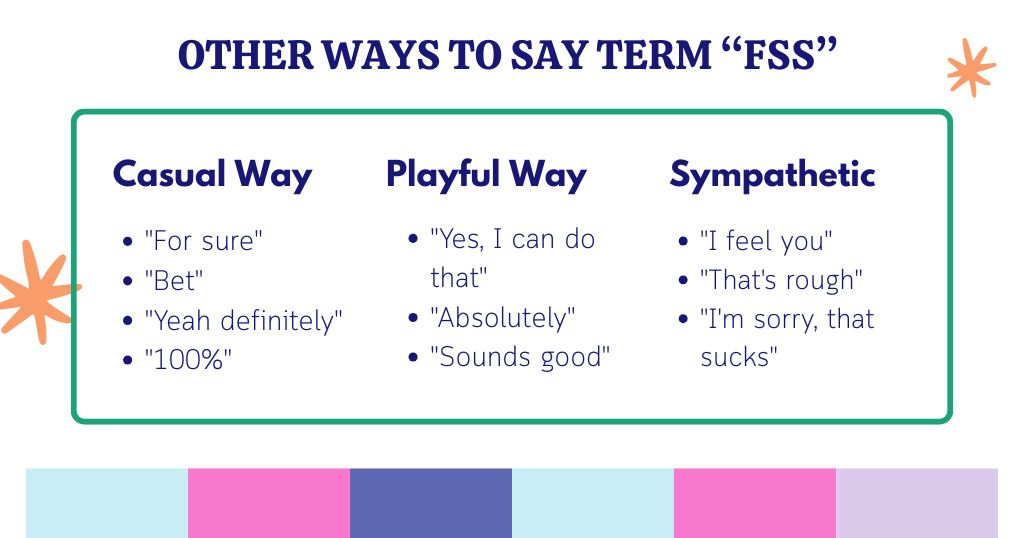
Casual with friends:
- “For sure”
- “Bet”
- “Yeah definitely”
- “100%”
If you’re looking for other casual replies, check out what GW means or what WDH means—they work in similar quick-response situations.
Polite or professional:
- “Yes, I can do that”
- “Absolutely”
- “Sounds good”
- “I’m on board”
When you’re being sympathetic:
- “I feel you”
- “That’s rough”
- “I’m sorry, that sucks”
- Just acknowledging what they said in your own words
Playful or joking:
- “Yessss”
- “You know it”
- “Oh definitely” (with obvious sarcasm)
Actual Conversations Where FSS Shows Up
Planning hangouts: “You coming to Jake’s party Saturday?” “fss, what time?”
Agreeing with a hot take: Under a tweet saying “Morning people are lying about being happy” Comment: “FSS 😭”
Confirming you’re serious: “Wait did you actually adopt a cat?” “FSS! Her name’s Pepper”
Sharing sadness: “My favorite show just got canceled” “fss that’s devastating 💔”
Sarcastic response: Someone posts a video of them tripping over nothing Comment: “So graceful FSS”
Quick confirmation in group chat: “Pizza or burgers tonight?” “Pizza” “FSS same”
Being supportive: “I bombed that presentation” “fss you did fine, everyone bombs sometimes”
Growth hacking on socials: In an Instagram comment section: “FSS? 👀” (meaning “follow for follow, sure?”)
Different Apps, Different Vibes
On TikTok, FSS shows up a lot in comments on POV videos or relatable content. It’s the quick “same here” or “so true” without writing an essay. You’ll also see it used as “follow for sure” in comment sections where people are trying to grow their accounts, though that’s become less common as the app cracks down on engagement pods.
Snapchat users throw it into streak messages or reactions to stories. Since Snap is more private and friend-focused, FSS there usually carries genuine emotion—either agreement or shared feelings. The context window is smaller, so meaning’s easier to read.
Instagram DMs use it similarly to regular texting, though it pairs heavily with emojis and reaction GIFs. The visual nature of Instagram means people rarely use FSS alone—it’s usually backed up by something else that clarifies tone.
Younger users (teens to early 20s) are way more comfortable with the sarcastic uses. If you’re texting someone in their 30s or older, they’re more likely to take FSS at face value as simple agreement.
Mix-Ups That Happen All the Time
People confuse it with FFS, which means “for fuck’s sake” and carries frustration or annoyance. Acronym mix-ups happen a lot—like confusing OOP with a typo or misreading DBL completely. If you type FSS but they read it as FFS, suddenly your enthusiastic agreement looks like you’re pissed off. Double-check your spelling.
Sarcasm doesn’t always land in text. Your ironic “fss sure Jan” might read as genuine agreement. If you’re being sarcastic, add context clues or just spell out your actual feelings.
Overusing it makes you seem checked out. If every response is “fss,” people start feeling like you’re not really engaged in the conversation. Mix it up with actual sentences sometimes.
The emoji matters way more than you think. “FSS” alone sits in this neutral zone where people project their own interpretation. That’s fine between close friends who know your patterns, but risky with acquaintances. When in doubt, add a clarifying emoji or word.
Regional and age gaps create confusion. FSS is much stronger in US teen and young adult slang than in other English-speaking countries. Someone from the UK might recognize it but wouldn’t naturally use it themselves. This isn’t about “wrong” usage—just awareness that it won’t hit the same everywhere.
Questions People Keep Asking
Is FSS rude?
Not usually, but context decides everything. Between friends, it’s casual and fine. To someone you don’t know well, authority figures, or in formal situations, it can seem dismissive or too casual. Read the room.
Can FSS be sarcastic?
Absolutely. Gen Z uses it ironically all the time—agreeing so enthusiastically it becomes obvious you’re joking. But sarcasm in text is risky because tone doesn’t translate. If someone might miss the joke, add a signal like “🙄” or just be direct.
Does it mean the same thing from different people?
Mostly yes, though communication styles can vary. Some people use it as a quick conversation closer—efficient and done. Others might pair it with emojis or use it to build rapport and show they’re listening. These are just tendencies, not rules. Most people use it in whatever way feels natural to them.
Is it only a texting thing?
Pretty much. You wouldn’t say “FSS” out loud—people would look at you weird. It exists because of typing shortcuts and internet culture. In actual conversations, you’d just say “for sure” or “definitely.”
What if I see FSS in a medical or work document?
Check the context hard. In healthcare, FSS refers to clinical scales or medical equipment. In business or tech, it might mean file systems or services. If it doesn’t make sense as slang, it’s probably an acronym for something else entirely.
Does FSS work in professional emails?
No. Save it for personal texts and casual social media. Emails, work Slack channels, and professional communication need clear, complete language. “Yes, I’ll complete that by end of day” beats “fss” every single time.
Bottom Line
FSS is one of those slang terms that feels simple until you actually try to pin it down. It shifts based on who’s saying it, where it’s being said, and what’s happening in the conversation. The core meaning—strong agreement or shared feeling—stays consistent, but everything around it flexes.
Your best move? Pay attention to how people in your specific circles use it. Slang isn’t one-size-fits-all. What works in your group chat might flop in someone else’s. And when you’re not sure if FSS fits the vibe, just type out your full thought instead. Nobody ever got confused by clarity.

Ezell is a content writer at Celebsfloor.com with a BA in English from AUF. With eight years of experience in language education and reference writing, he focuses on creating clear definitions for slang, abbreviations, acronyms, and everyday English terms. Ezell believes language should be accessible to everyone, so he writes straightforward explanations that help students, non-native speakers, and everyday readers understand confusing words. His work emphasizes accuracy, clarity, and practical usage examples that show how terms work in real conversations and online contexts.