SIMP describes someone who goes overboard trying to impress or please another person—usually in a romantic way—even when that person clearly isn’t interested back. It’s about doing too much for someone who isn’t matching your energy.
Why This Word Confuses So Many People
You’ve seen it thrown around in comments, maybe under someone’s Instagram post or in a group chat. Sometimes it sounds like a joke, other times like an actual insult. The confusing part? People use it for everything from buying someone coffee to defending a celebrity online.
One day your friend calls himself a simp for liking every post his crush makes. The next day, someone’s getting roasted in the comments for the same word. So which is it—playful or mean?
The truth is, it’s both. And that’s exactly why it trips people up.
The Real Meaning Behind the Term Simp in Slang
At its core, being a simp means you’re putting someone on a pedestal when they haven’t earned it or don’t even want to be there. It’s the guy who drops everything when his crush texts after ignoring him for weeks. It’s commenting “you’re perfect” under every single selfie from someone you barely know.
There’s a desperate edge to it. Not just liking someone—everybody likes people—but bending yourself into shapes trying to win them over. It’s when you lose your backbone in the process. It’s similar to BDP behavior where people go overboard, except SIMP is specifically about romantic attention.
People started using this word because “trying too hard” takes too long to type. It captures that whole vibe of one-sided effort where someone’s dignity is taking a backseat to their crush. The word stings a little on purpose. It’s meant to make you stop and think: “Am I doing too much here?”
Where You’ll Actually See It Used
You’ll see simp pop up when someone’s behavior crosses from sweet into eyebrow-raising territory.
In group chats, your friends might call you out: “Bro, you just offered to drive two hours to bring her food? Simp behavior.“ They’re not always serious—sometimes they’re just messing with you.
On social media, it shows up in comments all the time. Someone posts a thirst trap, and the replies are full of “y’all simps” aimed at everyone losing their minds in the comments. Or someone screenshots their own texts where they replied in 0.5 seconds and captions it “I’m such a simp.”
It’s also turned into a verb. “I’m simping over this new actor” just means you’re crushing hard. “Stop simping” means quit embarrassing yourself with all that attention you’re giving.
The word works because it’s short, punchy, and everyone immediately gets the vibe. Like GW in text messages or other quick slang, it saves time while getting the point across.
Reading the Room: Why Tone Changes Everything
Here’s where things get tricky:
Between close friends, calling someone a simp is usually lighthearted teasing. You know each other well enough to joke about who’s whipped or who’s acting desperate. The tone is playful, maybe with some laughing emojis attached.
But from a stranger online? That same word can feel like a real attack on your character. It’s basically calling you pathetic for showing interest in someone. When it comes from someone you don’t know, especially in a public comment section, it often carries some actual contempt.
The danger zone is when guys use it to shut down any man showing basic respect to women. Holding a door? Simp. Listening to your girlfriend’s problems? Simp. Calling out sexist jokes? Simp. In these cases, it’s less about actual desperate behavior and more about policing how men are “supposed” to act. That version feels hostile and is often meant to embarrass you into silence.
Pay attention to who’s saying it and why. If your buddy’s roasting you for writing another paragraph text to someone who left you on read, that’s probably friendly advice wrapped in a joke. If internet strangers are calling you a simp for treating someone like a human being, that’s something else entirely.
Read Also: What Does NM Mean in Texting? Here’s What People Really Mean
Times to Skip This Word Completely
Skip this word in professional settings, period. Don’t call your coworker a simp for being nice to the new hire. Don’t use it in work chats. It sounds immature at best and genuinely disrespectful at worst.
Avoid it with people you don’t know well. What feels like friendly banter to you might land as a genuine insult to someone else. Unless you’re tight with someone, you don’t know how they’ll take it.
Don’t weaponize it against people for just being kind. If a guy compliments his girlfriend in public, that’s not simping—that’s a relationship. If someone supports their friends, that’s not simping—that’s friendship. The word loses all meaning when it gets thrown at anyone showing basic human decency.
Also, think twice before using it about yourself too much. Some people lean into “I’m a simp” as self-deprecating humor, but it can come across as fishing for sympathy or attention. Once or twice is funny. Constantly? It starts sounding like you actually have low self-esteem.
Other Ways to Say the Same Thing
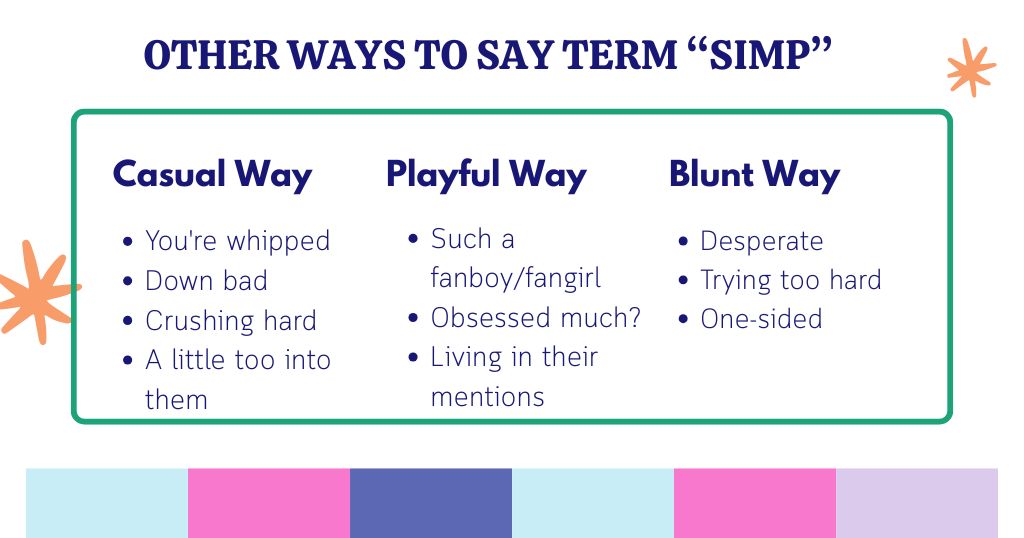
Casual/friendly:
- “You’re whipped”
- “Down bad”
- “Crushing hard”
- “A little too into them”
Playful/joking:
- “Such a fanboy/fangirl”
- “Obsessed much?”
- “Living in their mentions”
More polite:
- “Really into someone”
- “Putting in a lot of effort”
- “Going out of your way for them”
Blunt/honest:
- “Desperate”
- “Trying too hard”
- “One-sided”
These alternatives work better in certain situations. If you’re looking for more texting shortcuts, terms like WDH or SYFM might also come in handy depending on what you’re trying to say.
How It Looks in Actual Messages
Example 1: Text between friends: “Dude just bought her flowers and they’re not even dating” “Certified simp moment lol”
Example 2: Self-aware post: “Me refreshing their story every 5 minutes like I’m not simping”
Example 3: Group chat callout: “Why are you defending them so hard? You don’t even know this person. Simp energy.”
Example 4: Playful relationship: “I’ll simp for you any day” (from someone actually in a relationship, being sweet)
Example 5: Comment section: Under a celebrity photo: “The simps have arrived” (referring to all the thirsty comments)
Example 6: Warning from a friend: “Bro she’s leading you on. Stop being a simp and move on.”
Example 7: Ironic use: “Simping for this pizza right now” (using it for non-romantic obsession)
Example 8: TikTok caption: “POV: You’re a simp” (over a video of someone doing something embarrassing for their crush)
How Different Apps and Ages Use It
TikTok basically launched this word into the mainstream around 2019-2020. Before that, it was mostly used in hip-hop circles and certain corners of Reddit. The “Simp Nation” trend made it explode—suddenly everyone knew the term.
Twitch actually banned it for a while because people were using it to harass streamers, particularly women. That tells you something about how the word can be twisted into something nastier than just a joke about crushes.
Younger people—Gen Z especially—use it way more casually than it was originally intended. To them, it’s often just a funny way to talk about liking someone a lot. Older millennials might still hear it as more insulting because they remember when it carried real shame.
The meaning keeps shifting too. Now people simp for brands, fictional characters, even aesthetic trends. “Simping for this entire vibe” has nothing to do with romance. The internet does that—takes words and stretches them in every direction until they mean ten different things.
What People Get Wrong About This Term
A lot of people think any nice gesture makes you a simp. That’s not it. Buying your partner dinner isn’t simping. Complimenting someone you’re actually dating isn’t simping. The key is reciprocation and balance.
Another mix-up: thinking it only applies to men. While it started that way and still mostly targets guys, women get called simps too—especially when they’re chasing someone who treats them badly or obsessing over a celebrity.
Some folks miss that the word can be reclaimed. Plenty of people now call themselves simps proudly, turning it from an insult into a badge of “yeah, I really like this person, so what?” That flips the script completely.
The biggest confusion comes from tone. Without hearing someone’s voice or seeing their face, you can’t always tell if “simp” is friendly teasing or a genuine dig. Text kills context. That’s why some people avoid the word entirely—it’s too easy to misread.
Questions People Actually Ask About SIMP meaning
Is calling someone a simp always rude?
Not always, but it depends on your relationship and tone. Between friends, it’s usually just joking around. From strangers or in a mean-spirited way, yeah, it’s rude.
Can women be simps too?
Absolutely. The term started mostly for guys, but it works for anyone acting desperate or one-sided in their affection. Some people also use “pick-me” for similar behavior in women, but simp works too.
What’s the difference between being nice and being a simp?
Being nice is mutual and respectful without expectations. Being a simp means you’re overdoing it for someone who isn’t interested, often hoping they’ll suddenly like you back. It’s about imbalance.
Where did this word actually come from?
It’s been around since the early 1900s as short for “simpleton” (a foolish person). Rappers in the ’80s and ’90s used it to mean soft or easily manipulated. TikTok brought it back in a big way around 2019.
Is simping always about romance?
Not anymore. People simp for celebrities they’ll never meet, video game characters, brands, even food. The romantic meaning is still most common, though.
Can you simp in an actual relationship?
Some people use it that way, like “I simp for my girlfriend,” meaning they adore her. But originally, the whole point was that the feelings weren’t mutual. In relationships, it’s usually just playful talk.
Bottom Line
SIMP is one of those words that means different things depending on who says it, how they say it, and what’s actually happening. At its core, it’s about recognizing when someone’s putting in way more effort than they’re getting back—and usually losing themselves in the process.
Use it with people who get your humor. Skip it when there’s any chance it’ll sound mean. And if someone calls you a simp for just being a decent person? That says more about them than it does about you.

Ezell is a content writer at Celebsfloor.com with a BA in English from AUF. With eight years of experience in language education and reference writing, he focuses on creating clear definitions for slang, abbreviations, acronyms, and everyday English terms. Ezell believes language should be accessible to everyone, so he writes straightforward explanations that help students, non-native speakers, and everyday readers understand confusing words. His work emphasizes accuracy, clarity, and practical usage examples that show how terms work in real conversations and online contexts.