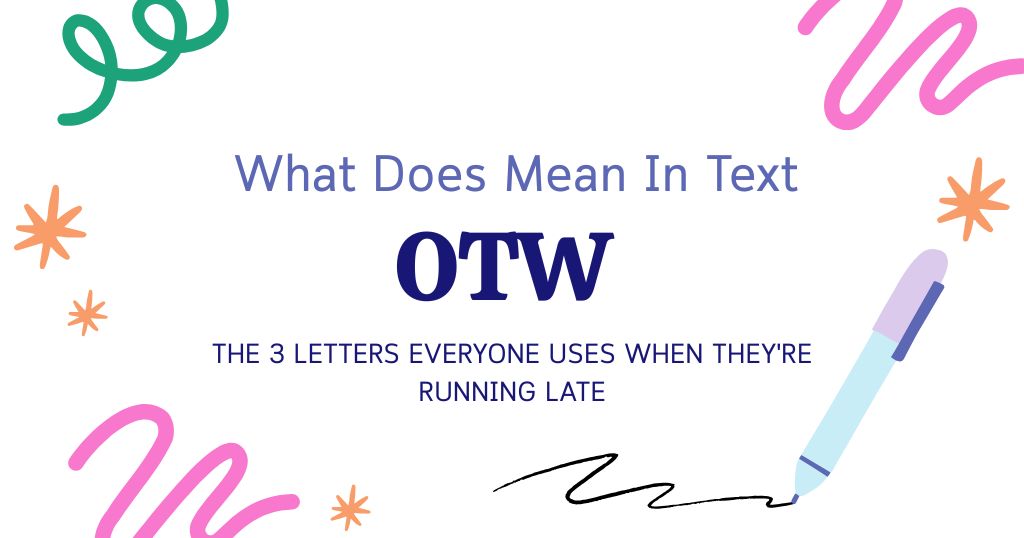
OTW means “on the way” in text messaging. It’s a quick update that someone (or something) is currently traveling to a destination.
Sounds Simple, Right? Not Always
Here’s the thing: if someone texts you “otw,” they might actually still be putting on their shoes.
This abbreviation has become one of those polite lies we tell when we’re running late but don’t want to admit it yet. You’ve probably seen it pop up in group chats, Snapchat replies, or Instagram comments—and if you’re wondering whether the person is really moving or just buying time, you’re not alone.
The confusion gets worse when you realize OTW doesn’t always mean someone’s in a car. Sometimes it’s about a package. Sometimes it’s artist slang for “coming soon.” And in certain corners of the internet, it doesn’t mean “on the way” at all.
What It Actually Means in Real Life
When someone types “otw,” they’re giving you a status update. That’s the basic idea.
But here’s what they’re really saying: “I acknowledge that I’m supposed to be somewhere, and I’m letting you know movement is happening (or about to happen).” It’s less about precision and more about managing your expectations.
People use it instead of typing full sentences because it’s fast and feels less guilty than saying “I’m late.” There’s also something casual about it—like you’re not making a big deal out of time. If you wrote “I am currently en route to our meeting location,” you’d sound like a robot. “otw” keeps things chill.
The feeling behind it? Usually a mix of acknowledgment and reassurance. Sometimes there’s a tiny bit of panic hidden in those three letters.
Read More: JS Meaning in Texting: When People Use It to Stay Casual
How People Use It in Everyday Situations
You’ll see OTW pop up mostly in these scenarios:
Quick location updates – Someone asks where you are, and instead of explaining traffic or which street you turned on, you just hit them with “otw.”
Delivery tracking – “The food is otw” or “Package otw” tells people something’s in motion without needing details.
Social plans – Group chats love this one. Someone always asks “where is everyone?” and multiple people reply “otw” at different times (some truthfully, some not).
Hype announcements – Artists, brands, and influencers use “new music otw” or “big announcement otw” to tease upcoming releases.
Here’s how it looks in actual messages:
Friend 1: yo where are u
Friend 2: otw! 5 mins
Friend 1: u said that 20 mins ago lol
Friend 2: THIS TIME I MEAN IT
See? It’s conversational, quick, and sometimes questionable.
Tone & Context: When Meaning Shifts
The relationship between you and the sender changes everything.
Between friends, “otw” is casual and forgivable. If your best friend is late and texts this, you probably roll your eyes but don’t stress. You know they’re trying.
From a coworker, it’s more neutral—just a status update. “The files are otw” from someone at work means business, no emotion attached.
To a date or new person, this can feel frustrating if they’ve already made you wait. If someone you just started talking to says “otw” and then ghosts for 30 minutes, that’s a red flag about respect for your time.
In public comments, like on Instagram or TikTok, “otw” usually means “coming soon” and has zero urgency. “New video otw 🔥” could drop tomorrow or next month.
Here’s a warning: if someone keeps saying “otw” without arriving, the term starts sounding like an excuse instead of an update. Overusing it kills trust.
The tone also flips based on punctuation. “otw” feels calm. “OTW!!” sounds rushed or excited. “otw…” might mean they’re annoyed or hesitant.
Read More: GTS Meaning in Text: The 3 Meanings You’ll Actually See
When You Should NOT Use This Term
Don’t use OTW in these situations:
Formal work emails – Your boss doesn’t need “Report otw.” Write it out.
Emergencies – If someone’s actually worried or it’s time-sensitive, be specific. “I’ll be there in 8 minutes” beats “otw.”
When you haven’t even left – This is the big one. If you’re still at home and say “otw,” you’re setting yourself up to look dishonest. People check timestamps now.
Professional client messages – Clients expect clarity, not abbreviations.
After you’ve already been late twice – At some point, “otw” becomes a credibility issue.
Using it publicly on someone’s post when they’re upset or sharing something serious also feels tone-deaf. Read the room first.
Natural Alternatives (Grouped by Tone)
Different situations call for different phrases. Here’s how OTW compares to similar terms:
| Term | Best For | Tone Difference |
| OMW | Your own travel (“I’m omw”) | More personal, implies you’re physically moving |
| ETA 10 min | Specific timing needed | Professional, clear, removes guesswork |
| Almost there | Very close arrival | Warmer, less formal than OTW |
| Leaving now | Just starting your trip | Honest, sets realistic expectations |
| En route | Formal updates | Sounds stiff, avoid in casual chats |
OMW vs OTW is the most confused pair. Use OMW when you are the one moving. Use OTW when describing something else (like a delivery) or speaking more generally. “I’m omw” is personal. “It’s otw” is about an object or someone else.
Read More: HY Meaning in Text: What It Means and How to Reply
Real-Life Examples
Here’s how OTW shows up across different contexts:
“pizza otw, they said 20 mins”
“otw to grab coffee, want anything?”
Group chat:
“guys i’m otw i swear”
“that’s what you said an hour ago💀”
“New merch drop otw next week 👀”
“Uber driver says he’s otw but still 12 mins away”
“The check is otw, should clear by Friday” (work context)
“omg i’m so sorry, otw now!! got stuck in traffic”
Instagram comment:
“Album otw soon 🎵” (artist teasing release)
Notice how some feel urgent, others vague, and some are straight-up hype with no real timeline.
Platform or Culture Notes
OTW feels most natural on messaging apps—iMessage, WhatsApp, Snapchat, texting. That’s where people expect quick, low-effort updates.
On Instagram and TikTok, it’s evolved into announcement language. When influencers or creators say something’s “otw,” it rarely means right now. It means “eventually, stay tuned.”
There’s also a generational thing happening. Younger users throw “otw” around casually, even for things that aren’t moving yet. Older texters or professional contexts still expect it to mean literal travel.
In Filipino chat culture, “otw na” has become a running joke because of “Filipino time”—the idea that people say they’re on the way when they’re actually still getting ready. It’s the same three letters, but culturally loaded.
And here’s a niche one: in fanfiction circles, OTW stands for “Organization for Transformative Works,” the group behind Archive of Our Own (AO3). If you see someone tweet “donate to OTW,” they’re not talking about a road trip.
More Post: PMO Meaning in Text: The Frustrated Meaning Behind It
Common Misunderstandings
People assume “otw” always means immediate movement. It doesn’t.
Sometimes it means “I’m about to leave.” Sometimes it means “I’m thinking about leaving.” Sometimes it’s a straight-up stall tactic. The gap between saying it and actually being in motion can be 20+ minutes, and that’s where frustration builds.
Another mix-up: thinking OTW and OMW are identical. They’re close, but OMW puts the focus on you. OTW can be about anything or anyone. “The package is otw” works. “The package is omw” sounds wrong.
Tone also gets lost. If someone sends “otw” with no context, you don’t know if they’re stressed, relaxed, or lying. Text strips away voice and facial expressions, so you’re left guessing.
And people forget that overusing it makes you seem unreliable. If you’re always “otw” but never actually arriving on time, the term becomes your reputation.
Meaning Differences Based on Who Uses It
When a close friend sends “otw,” you probably don’t question it much. You trust they’ll show up eventually, even if their timing’s off.
When someone you barely know says it, you’re more likely to check the clock and wonder if they’re serious. There’s less trust built in, so the phrase carries more weight.
In group settings, “otw” often means “I’m the last one, don’t wait for me to order.” It’s an admission of lateness disguised as a status update.
Younger people might use it more playfully or loosely. Someone in their teens could say “happiness is otw” as a mood caption, not a literal statement. Older folks usually stick to the practical meaning—actual travel.
If a stranger uses it in a business transaction (like a buyer saying “payment otw”), you’re right to want more specifics.
Read More: DW Meaning in Text: 4 Situations Where People Say It
FAQs
Is OTW rude?
Not usually, but it can feel dismissive if someone keeps saying it without showing up. Saying it once is fine. Saying it three times without arriving is disrespectful.
What does OTW mean on Instagram?
On Instagram, it’s typically used to announce something’s coming soon—like a product drop, music release, or content post. It’s hype language, not a GPS update.
What’s the difference between OMW and OTW?
OMW means “on my way” and refers to you personally. OTW means “on the way” and can describe anything—you, someone else, or an object like food or mail.
Can OTW mean something other than “on the way”?
Yes. In certain contexts, OTW stands for “Organization for Transformative Works” (a fanfiction legal group), “Off The Wall” (Vans brand slang), or even medical terms like “over-the-wire.” But in texting, it almost always means “on the way.”
Should I use OTW at work?
Only in casual workplace chats, like team messaging apps. Avoid it in formal emails or client communication. Spell it out if there’s any chance of confusion.
Wrapping This Up
If someone tells you they’re “otw,” take it with a grain of salt until you see proof.
The term itself is harmless—it’s just shorthand for movement. But how people use it reveals a lot about timing, honesty, and respect. Some people mean it literally. Others mean “I’m aware I’m late and this text is my guilt offering.”
You’ll figure out pretty fast who’s reliable and who treats “otw” like a get-out-of-jail-free card. And if you’re the one sending it? Make sure you’re actually moving, or at least close to it. Your credibility depends on it.

Ezell is a content writer at Celebsfloor.com with a BA in English from AUF. With eight years of experience in language education and reference writing, he focuses on creating clear definitions for slang, abbreviations, acronyms, and everyday English terms. Ezell believes language should be accessible to everyone, so he writes straightforward explanations that help students, non-native speakers, and everyday readers understand confusing words. His work emphasizes accuracy, clarity, and practical usage examples that show how terms work in real conversations and online contexts.