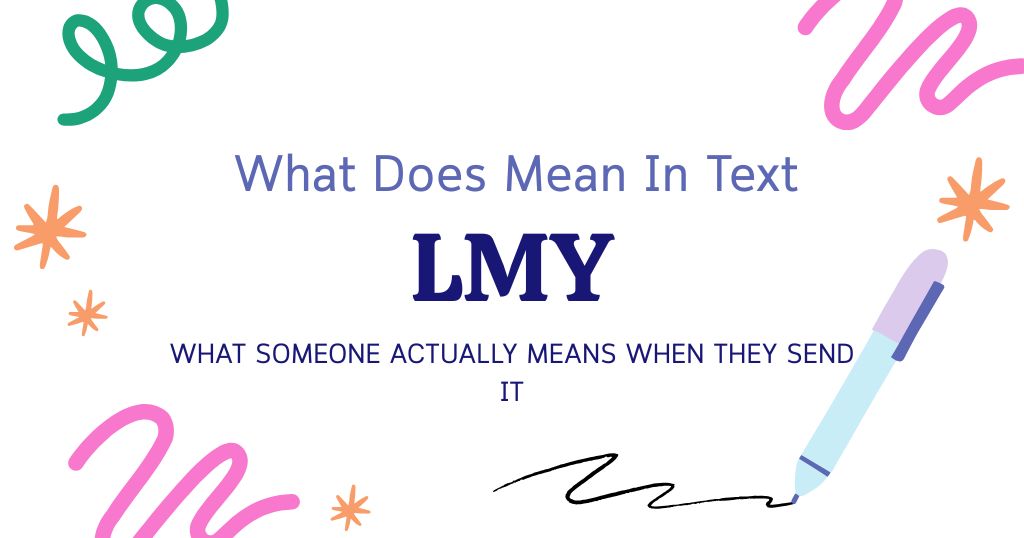
LMY typically means “Love and Miss You” in texting and social media. People use it to express affection and longing toward someone they care about but haven’t seen in a while.
Why This Gets Confusing
You’re scrolling through your messages and someone hits you with “LMY” at the end of a conversation. If you’ve never seen it before, your brain probably goes into detective mode. Is it a typo? Some new slang you missed? A code between them and someone else?
Here’s the thing: LMY isn’t just one meaning pretending to be simple. People use it in at least two completely different ways, and nobody really warns you about that. So yeah, confusion makes sense.
What It Really Means When Someone Says It
When someone types LMY, they’re usually trying to pack a lot of feeling into three little letters. It’s that specific emotional cocktail of “I care about you” mixed with “I wish you were here right now.”
People pick this over typing out the full words because it feels lighter. Saying “I love and miss you” in a regular text can sometimes feel too heavy or formal, especially if you’re just checking in. LMY keeps things warm without making it weird.
The second way people use it? “Love You More.” This one’s a direct comeback to someone who just said “I love you” or “ILY.” It turns the conversation into a playful little back-and-forth about who loves who more. It’s cute. It’s a bit competitive in a sweet way.
Read More: What Does Jit Mean When Someone Texts You?
How It Shows Up in Real Conversations
You’ll mostly see LMY pop up when someone’s wrapping up a chat. It’s that sign-off energy, like a digital hug before you both go do other things.
Maybe your best friend moved to another city and you’re texting about random stuff. The conversation winds down and they drop an “LMY” before logging off. Or your mom sends it after you update her about your week. Sometimes it’s your partner ending a goodnight text.
Here’s what it looks like:
Example 1:
You: “Just finished my shift, heading home”
Friend: “Be safe! LMY 💙”
Example 2:
Sister: “Can’t believe it’s been a month since we hung out”
You: “I know right? LMY, let’s plan something soon”
Example 3:
Partner: “ILY, have a good day at work”
You: “LMY! Talk later ❤️”
Notice how the third one is different? That’s the “Love You More” version kicking in.
When Tone Completely Changes Everything
This is where people mess up. LMY from your best friend of ten years hits different than LMY from someone you matched with on a dating app last week.
If a close friend or family member uses it, it’s pure warmth. No hidden meaning. They’re just being affectionate because that’s your relationship.
But imagine someone you barely know sends “LMY” after like two conversations. That’s gonna feel rushed. Maybe even a bit much. It’s not that they’re doing something wrong—it just doesn’t match the relationship level yet.
Watch out for this: If someone uses LMY in a group chat where not everyone knows each other well, it might create awkward vibes. One person thinks it’s sweet, another person’s wondering why this stranger is getting so personal.
And here’s a sneaky one: sarcasm doesn’t translate through these three letters. If someone’s actually annoyed with you and types “Yeah sure, LMY” after an argument, that’s not affection. That’s them being petty. Context is everything.
Read More: UWU Meaning in Text: Why This Cute Expression Became Popular
Situations Where You Shouldn’t Use LMY
Don’t bring LMY into your work Slack. Just don’t. Even if you’re friendly with your coworkers, it reads way too personal for a professional space. Your boss doesn’t need “LMY” in their notifications.
Skip it with acquaintances or people you’re still getting to know. It assumes a closeness that might not exist yet, and that makes things uncomfortable.
Public comments on social media? Risky. If you comment “LMY!” on someone’s Instagram post and you’re not actually close with them, other people reading it might find it confusing or even invasive.
Also, don’t overuse it with the same person. Even sweet phrases lose their punch when you say them constantly. If every single text ends with LMY, it stops feeling special and starts feeling like auto-fill.
More Post: What Does IDM Mean in Text? When Someone Texts You
Other Ways to Say the Same Thing
Sometimes LMY isn’t the right fit, but you still want to express something similar. Here’s how these compare:
| Term | What It Means | When to Use It |
| IMY | I Miss You | When you only want to express missing someone, without the love part |
| ILY | I Love You | Direct and clear, but more serious than LMY |
| LYSM | Love You So Much | Stronger and more intense than LMY |
| XOXO | Hugs and Kisses | Playful and affectionate, less emotionally heavy |
| Miss u | Miss you | Casual and spelled out, feels less “internet slang” |
Pick based on your relationship and what you’re actually feeling. IMY works for friends you’re not super emotional with. ILY is clearer but bigger. LYSM is when you’re really in your feelings.
Real Messages People Actually Send
Here’s how LMY appears in different situations:
Long-distance friendship:
“Saw this meme and thought of you immediately. LMY, we need to FaceTime soon”
Family check-in:
“Thanks for sending those photos from the reunion! LMY ❤️”
Romantic goodnight:
Them: “Sweet dreams babe, ILY”
You: “LMY! Sleep well 😘”
After a visit:
“Already missing hanging out with you. LMY tons”
Responding to good news:
Friend: “I got the job!!”
You: “YESSS I’m so proud of you! LMY”
Quick check-in:
“Hope your presentation went well today. LMY”
Notice how some are standalone and some are responses? That’s your clue to which meaning they’re using.
Where You’ll See It Most
LMY thrives on Instagram and Snapchat. Instagram especially, in DMs or comments on throwback posts where people are feeling nostalgic. Snapchat uses it because everything disappears anyway, so people get more casual with emotional stuff.
Texting apps like WhatsApp or iMessage see it too, usually between people who text regularly and have their own rhythm of communication.
It’s less common on Twitter or TikTok comments because those feel more public and performative. LMY is more of a one-on-one or small group thing.
Generationally, younger people (Gen Z and younger millennials) use it more freely. Older folks might spell it out or just not use abbreviations like this at all. If your aunt texts you “LMY,” she probably picked it up from someone younger or she’s adapting to how you communicate.
Read More: What Does JSP Mean in Text? Tone, and Common Mistakes
What People Get Wrong About It
The biggest mix-up? Thinking LMY and LMK are the same thing. They’re not even close. LMK means “Let Me Know” and it’s totally practical, like “LMK when you’re free.” Zero emotion involved. If you respond to “LMY” with “okay, I will,” the other person’s gonna be confused.
Some people also assume LMY is only romantic. It’s not. Friends use it. Siblings use it. It’s affectionate, sure, but affection isn’t automatically romance.
And here’s a weird one: people sometimes read too much into how someone says it. Like, if there’s no emoji with the LMY, does that mean they’re mad? Usually no. Sometimes people just type fast and don’t add hearts to everything. Don’t spiral over missing emojis.
Does It Mean Something Different From Different People?
Yeah, actually. When your mom sends LMY, it’s pure mom energy—caring, checking in, making sure you’re okay. When your best friend sends it, it’s probably lighter, more casual, part of your normal back-and-forth.
If someone you’re dating sends LMY early on, they might be testing the waters. It’s less intense than saying “I love you” fully spelled out, so it feels safer. They’re showing affection without going all-in yet.
From a sibling, it might even be a little funny. Like you both know you care about each other, but saying it plainly feels awkward, so LMY is the compromise.
Strangers or new people using it? That’s usually a red flag that they’re moving too fast or don’t understand social boundaries in texting.
Read More: SMTH Meaning in Text: The Quick Abbreviation Everyone Uses
Quick Questions People Actually Ask
Can LMY mean something in medical terms?
Not exactly. You might see “LYM” (Lymphocytes) on blood test results, but LMY isn’t a standard medical abbreviation. If you see it in health documents, it’s probably a typo or shorthand someone made up.
What’s LMFY?
That’s “Let Me Find You.” People use it in a protective way, like “I’ve got your back,” or playfully when joking around. Totally different vibe from LMY.
What does LMTY mean?
“Let Me Tell You.” It’s how people start stories or opinions, like “LMTY about what happened at work today.” Not emotional like LMY.
How should I respond to LMY?
Match their energy. If it’s “Love and Miss You,” say “LMY too!” or “Miss you more ❤️.” If it’s “Love You More,” be playful back with “No way, I love YOU more” or just “LMY 😊.”
Is LMY only used by girls?
Nope. Anyone can use it. Girls might use it slightly more often in certain friend groups, but guys say it too, especially to family or partners.
Does LMY on Snapchat mean something different?
Not really. It’s the same meanings, just Snapchat makes everything feel more casual because messages disappear. People might use it more freely there.
Wrapping This Up
LMY is one of those terms that feels simple until you realize it’s doing double duty. Most of the time, it’s people saying they love and miss you in the quickest way possible. Sometimes it’s a sweet little “I love you more” competition.
The trick is paying attention to the conversation around it. Who’s saying it? What were you just talking about? How do you normally communicate?
Once you’ve got that down, LMY stops being confusing and starts being exactly what it is: a quick way to remind someone they matter.

Ezell is a content writer at Celebsfloor.com with a BA in English from AUF. With eight years of experience in language education and reference writing, he focuses on creating clear definitions for slang, abbreviations, acronyms, and everyday English terms. Ezell believes language should be accessible to everyone, so he writes straightforward explanations that help students, non-native speakers, and everyday readers understand confusing words. His work emphasizes accuracy, clarity, and practical usage examples that show how terms work in real conversations and online contexts.